Selecting the right range hood for your kitchen is an important decision that can significantly impact both the functionality and aesthetics of the space. However, many homeowners make mistakes during the selection process, leading to poor ventilation and unsatisfactory performance. In this post, we’ll highlight the most common mistakes people make when choosing a range hood and offer practical advice on how to avoid them.
1. Choosing a Range Hood That Is Too Small
One of the most common mistakes people make when selecting a range hood is choosing a model that’s too small for their kitchen. If the range hood is too small, it won’t be effective at capturing smoke, grease, and odors from the air. This is especially problematic for larger kitchens or homes where cooking is done frequently.
When selecting a range hood, make sure its size matches your cooktop. For instance, a hood kitchen range should be at least as wide as your stove, if not slightly wider. A larger range hood will ensure that all smoke and grease produced while cooking are captured and filtered out. If you cook frequently or at high heat, opt for a range hood with a higher CFM (cubic feet per minute) to provide the necessary ventilation.
2. Overlooking Noise Levels
Another common mistake is ignoring the noise levels of the range hood. No one wants to deal with a loud, disruptive fan while cooking, but many homeowners overlook the sound factor when selecting a range hood. Noise is an important consideration, particularly in open-plan kitchens or smaller spaces where the sound can become overwhelming.
Fortunately, modern range hoods are designed to operate more quietly without sacrificing power. Look for ductless range hoods or models with noise-reducing technology. These options offer a quiet cooking experience without compromising on ventilation performance, ensuring that your kitchen remains peaceful and comfortable.
3. Choosing Style Over Function
While it’s important for your range hood to match your kitchen’s style, many people make the mistake of choosing aesthetics over functionality. A range hood is an appliance that should primarily serve a functional purpose: removing smoke, grease, and odors from your kitchen. However, if you focus too much on design, you might sacrifice performance.
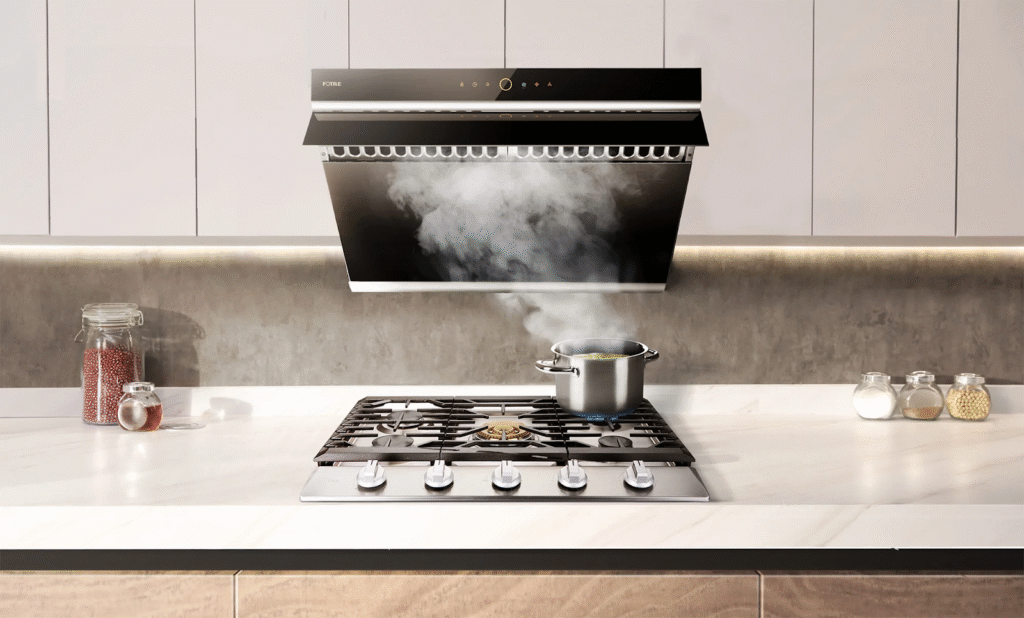
A black range hood is an excellent choice if you’re looking for both style and functionality. It adds a bold statement to your kitchen while maintaining high performance. Black hoods are easier to maintain and clean, as they hide grease and stains better than lighter-colored models. However, make sure the hood’s CFM is suitable for your cooking needs and the size of your kitchen. A range hood should meet both your aesthetic and performance requirements to create the best possible cooking environment.
4. Not Considering Maintenance Requirements
Many homeowners overlook the maintenance needs of their range hood. Just like any other kitchen appliance, your range hood needs to be cleaned regularly to maintain its effectiveness. Grease filters, for example, should be cleaned monthly to ensure the hood is working properly. If you have a ductless range hood, the carbon filters will need to be replaced every few months.
Before purchasing a range hood, be sure to consider how easy it will be to clean and maintain. Look for models with removable, dishwasher-safe filters to simplify the process. For ducted range hoods, check that the ducts are easy to access for regular cleaning to prevent grease buildup and ensure optimal airflow.
5. Underestimating the Power of a Range Hood
Many people make the mistake of underestimating the power they need from a range hood. While a smaller, less powerful model may seem sufficient for everyday cooking, it’s important to remember that heavy cooking tasks—such as frying or grilling—require more airflow to remove grease and smoke from the kitchen.
When shopping for a range hood, consider the type of cooking you do most often. If you often cook with high heat or do a lot of frying, choose a hood kitchen range with a higher CFM rating. A high-powered range hood will ensure that your kitchen remains free from smoke and grease, even during the most intense cooking sessions. Don’t be tempted by low-power models that may not be able to keep up with the demands of your kitchen.
6. Forgetting to Account for Kitchen Layout
The layout of your kitchen plays a significant role in selecting the right range hood. A range hood that works well in a large, open kitchen may not be suitable for a smaller, more compact space. When selecting your range hood, consider where it will be installed and how it will interact with your kitchen layout.
If you have an island cooktop, for example, an island range hood is necessary to provide adequate ventilation. Ductless range hoods may be ideal for smaller spaces where installing ducts is not possible. Pay attention to the configuration and size of your kitchen to ensure that the range hood fits both the space and your needs.
7. Final Thoughts on Avoiding Range Hood Mistakes
Choosing the right range hood for your kitchen is essential for both the functionality and the aesthetics of the space. By avoiding these common mistakes—choosing a hood that’s too small, neglecting noise levels, prioritizing style over function, and underestimating the power—you can ensure that your range hood provides maximum performance while blending seamlessly into your kitchen design.
Whether you opt for a hood kitchen range for heavy-duty cooking, a ductless range hood for smaller spaces, or a black range hood to add a bold design statement, the right range hood will enhance your cooking environment, making it cleaner, more comfortable, and more efficient.